The Indoor Play Toy That Keeps Kids Entertained
This light-up indoor play toy presses flat, flies, then pops back into a bouncing ball mid-throw. Here’s why kids repeat it and where it actually belongs.
TL;DR
Our Kids Can’t Put This Indoor Play Toy Down
How Does This Transforming Indoor Play Toy Actually Work?
Disclaimer: This post contains affiliate links. For more information, see my disclosures here. As an Amazon associate, we earn from qualifying purchases.
An indoor play toy is worth it if the weather has your kids stuck inside and the alternative is a screen or a wrestling match on the couch. This one presses flat, holds that shape for a few seconds while you throw it, then pops back into a bouncing ball on its own, lighting up the whole way. That is the entire trick and the reason kids do it forty times in a row. Ours has survived a stretch of rainy afternoons, and the honest version is that it wants a hallway or a basement rather than a furnished living room.
What It Is (And Why You Need It)
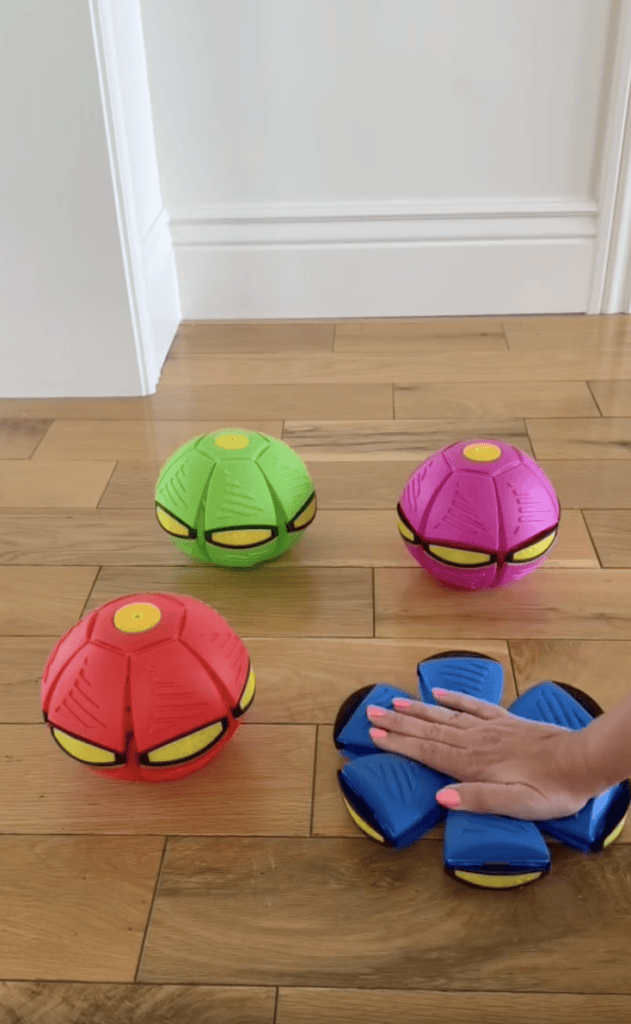
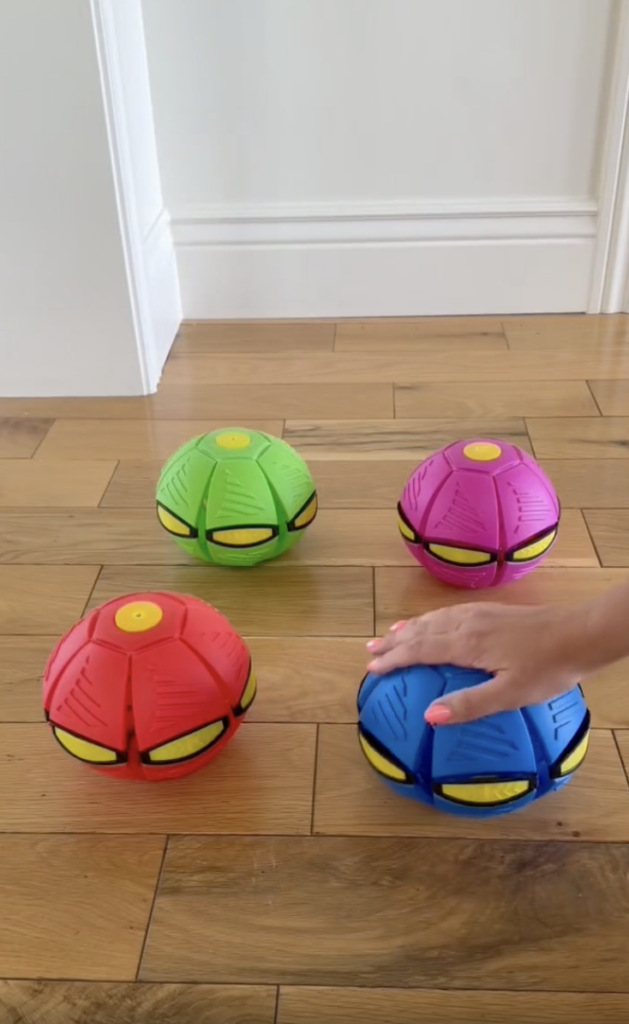
The indoor play toy is a soft rubber transforming ball with built-in LED lighting that presses flat into a flying disc and reverts to a bouncing ball, sized for one hand. The case for having something like this on hand got a bit sharper this year. When you press it, it holds the flat shape for a few seconds, and then springs back into a ball on its own. Two shapes, one toy, and the transformation itself is mechanical rather than electronic. The press is the part kids get hooked on. It lights up while all of this is happening, which is unnecessary and also the reason our kids want the hallway lights off. A toy with a surprise built into it clears that bar in a way a foam ball does not.
Why We Love it
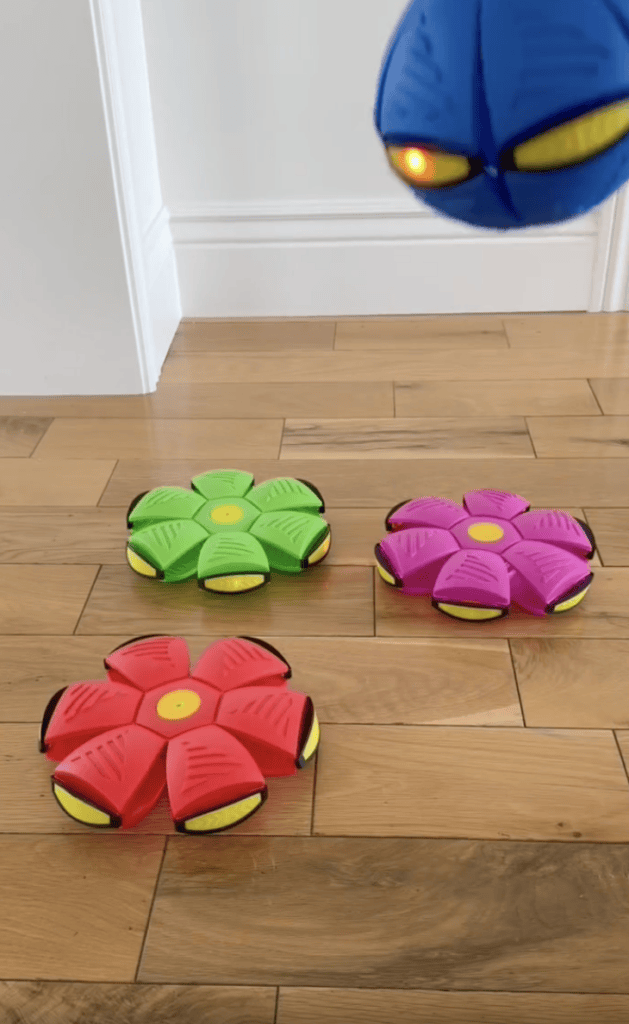
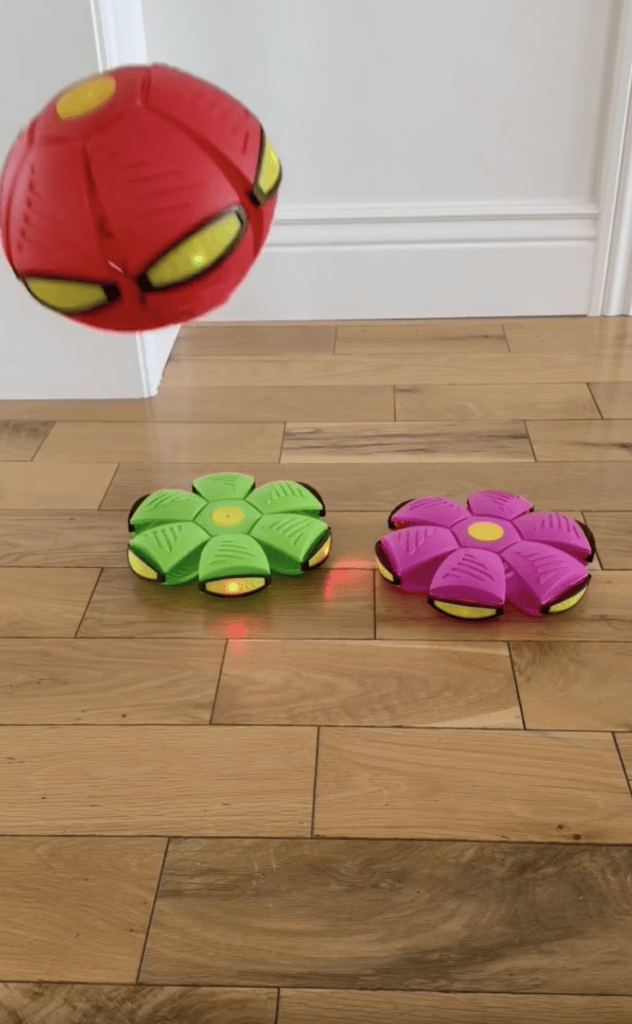
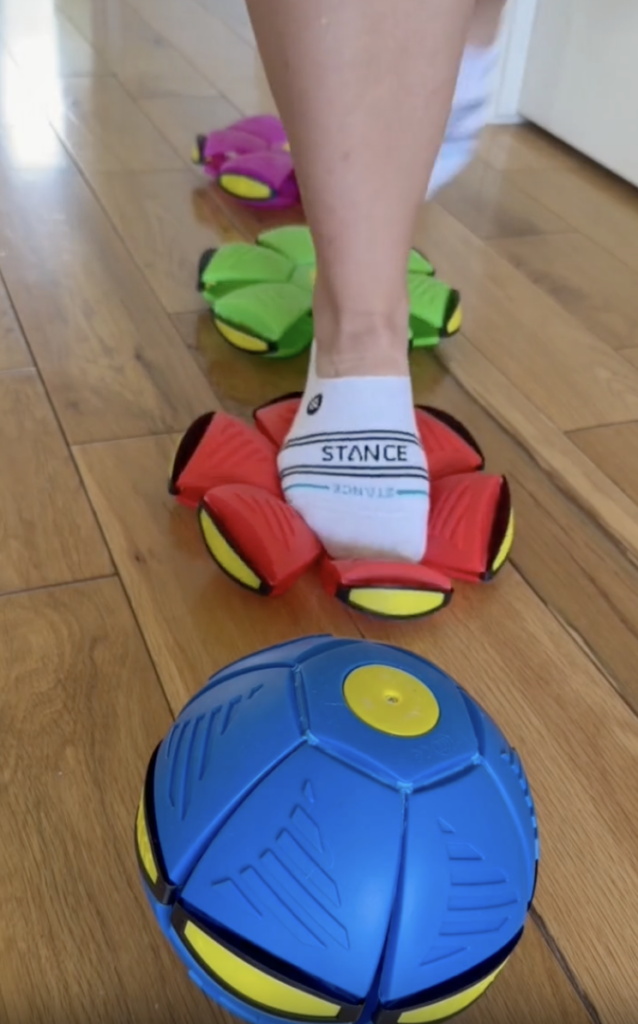
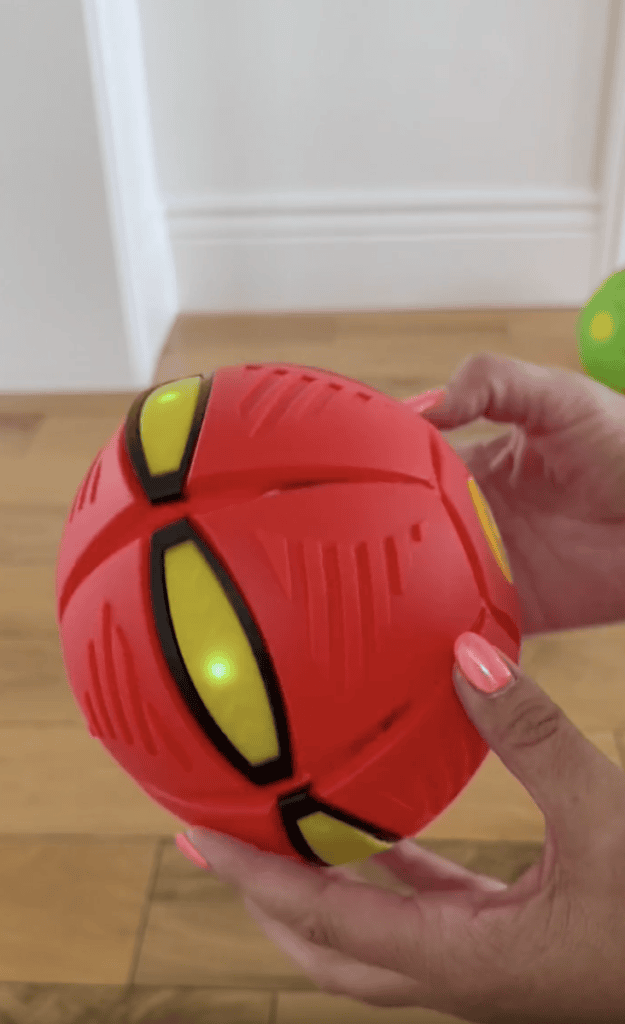
- The transformation is the game, so it holds attention far longer than a plain ball
- Two ways to throw one toy, so the play varies in a small space
- The lights make a dark hallway or a basement the best place to play, which is also where you want it
- Soft rubber, so a direct hit on a wall or a sibling is not the problem
- The transform needs no charging, so the toy still works when the lights eventually die
- Works outside just as well, so it does not become a rainy-day-only purchase
Pros and Cons
Pros
- The press-and-pop transformation is a genuine trick, not a marketing feature
- Two ways to throw it, so the game varies in a small space
- Lights make the dim rooms the fun ones, which is where you want the play happening
- Soft rubber, so impacts do not damage walls or hurt
- The transform is mechanical, so the toy still works after the lights die
- Works indoors and out, so it is not a single-season buy
Cons
- The pop-back is unpredictable by design, so it needs a cleared room rather than any room
- The flat form relies on a contact area at the base that stops holding if it gets dirty
Bonus Tips… What you didn’t see in the reel 👀
- Check the battery door before anyone plays with it. If it opens without a tool and you have a toddler in the house, that decides where this toy lives, regardless of what the age label says.
- Press it with the flat of your palm, not your fingertips. Kids default to poking it, which does not seat it properly, and then it pops back before they have thrown it.
- Clean the base if the flat form stops holding. On this style of toy, the disc shape depends on a contact area at the bottom, and dust and carpet fluff are what shorten the delay. A wipe with a damp cloth restores it, and most people throw the toy out instead.
- Turn the hallway lights off. The lights are the difference between a bouncy ball and an event, and the darkened hallway happens to be the room you wanted them in anyway.
- Throw it low and flat indoors. A high throw gives the pop more time to happen and more height to bounce from, which is how it ends up on top of a bookshelf.
- Buy two if you have more than one kid. Taking turns with a throwing toy indoors is a shorter activity than it sounds.
Where To Get it
The light-up transforming indoor play toy is available on Amazon with Prime shipping. Target, Walmart, and toy stores stock soft indoor balls, though the transforming light-up versions are still mostly an online purchase. Indoor toys get promoted heading into winter, which is both when you need them and when pricing is worst. Late summer is the quieter window.
Frequently Asked Questions
You press the ball flat with your palm and it holds the disc shape for a few seconds, long enough to throw it. It then springs back into a ball on its own, usually mid-flight or on landing, lighting up as it goes.
The material is soft rubber and will not mark walls or hurt on impact. The thing to plan around is the pop-back, which changes the toy’s direction unpredictably, so it belongs in a hallway or cleared room rather than a furnished living room.
The package says all ages, which is a marketing phrase rather than a safety grade. Because it lights up, it contains a small battery, and CPSC warns that a swallowed button cell battery can burn through a child’s esophagus in as little as two hours. Check that the battery compartment needs a tool to open before letting a young child near it.
Usually because the contact area at the base has picked up dust or carpet fibers. Wiping it with a damp cloth normally brings the delay back.
Yes. The transformation is mechanical rather than electronic, so the press-and-pop keeps working after the lights are done. You lose the best part of playing with it in the dark.
If you have been on the fence, this one is worth it as a rainy-day option with a room assigned to it. The transformation is a real trick and kids do it over and over, which is more than most indoor toys manage, and the lights turn the hallway into the best place in the house for twenty minutes. Just take the unpredictable pop seriously, check the battery door on arrival, and pick the hallway rather than the living room. Grab one before the weather turns.
More Reviews You’ll Love
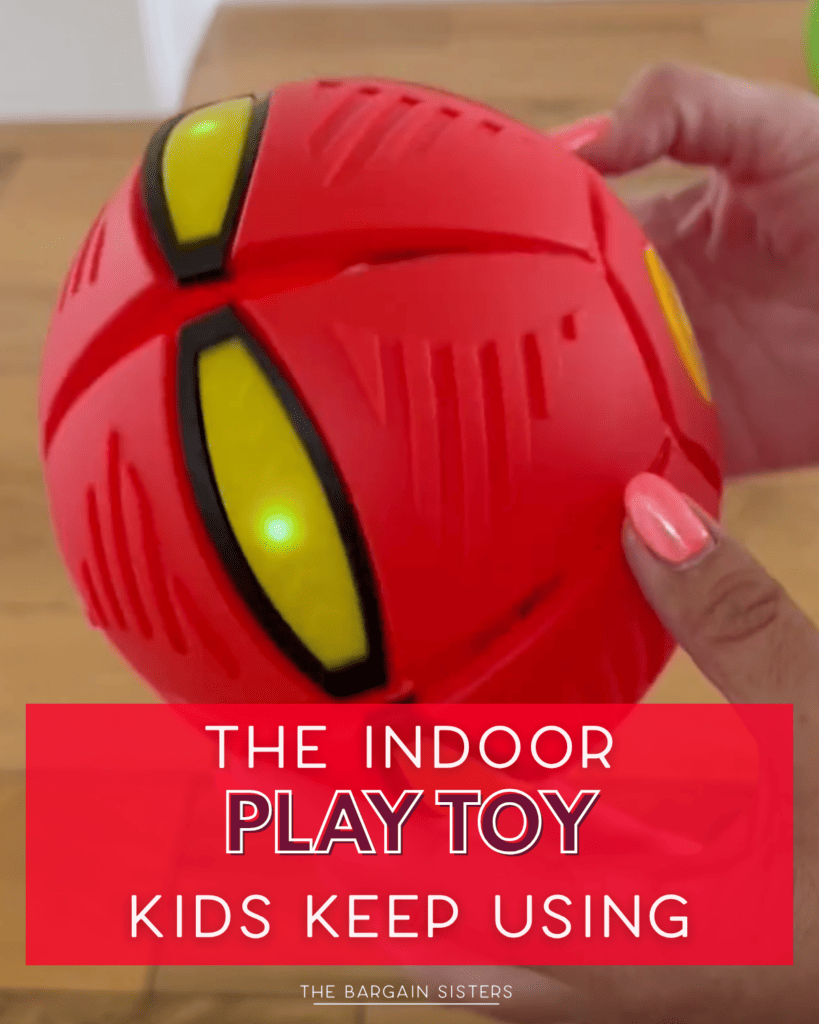
Want to save this to remember later? Make sure to pin the image below!

By Cassie & Ali – Bargain-hunting sisters and moms helping 500,000+ families save money since 2019.
Last Updated:
