Does This Tower Shoe Rack Really Clear the Entryway?
We tested a tower shoe rack in a narrow entryway. Here is how many pairs it holds, what does not fit, and whether the floor actually stayed clear.
TL;DR
Tower Shoe Rack
How Does a Tower Shoe Rack Hold More in Less Space?
Disclaimer: This post contains affiliate links. For more information, see my disclosures here. As an Amazon associate, we earn from qualifying purchases.
Our entryway floor kept disappearing under a pile of shoes no matter how many times we tidied it. A flat rack would not fit the space, and a basket just moved the pile. The fix turned out to be going up instead of out: this tower shoe rack stacks pairs vertically, holds more in a fraction of the floor space, and is the one thing that finally kept our floor clear for more than a day.
What It Is (And Why You Need It)
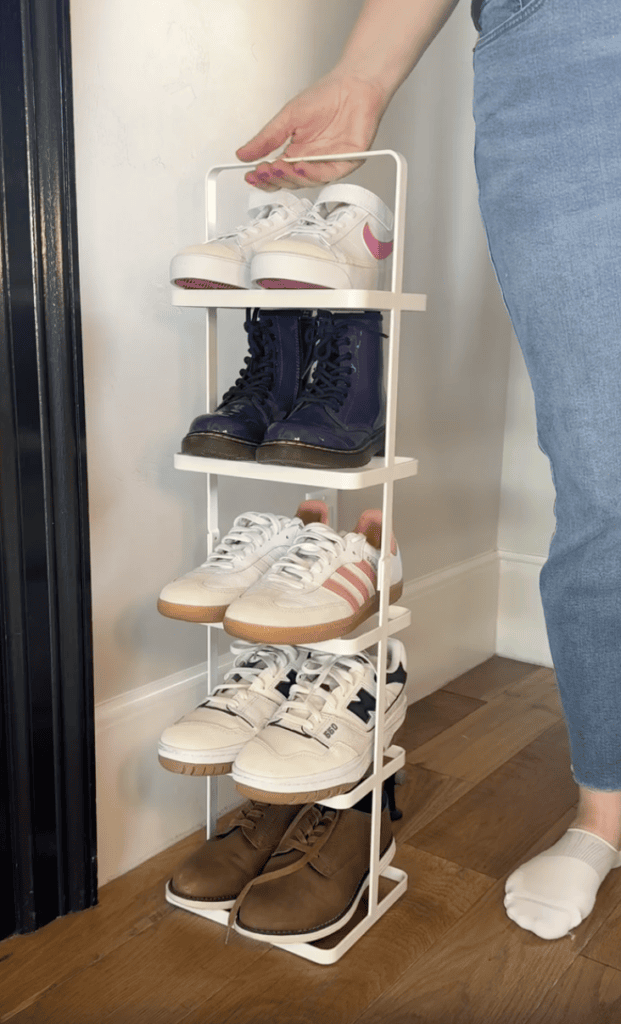
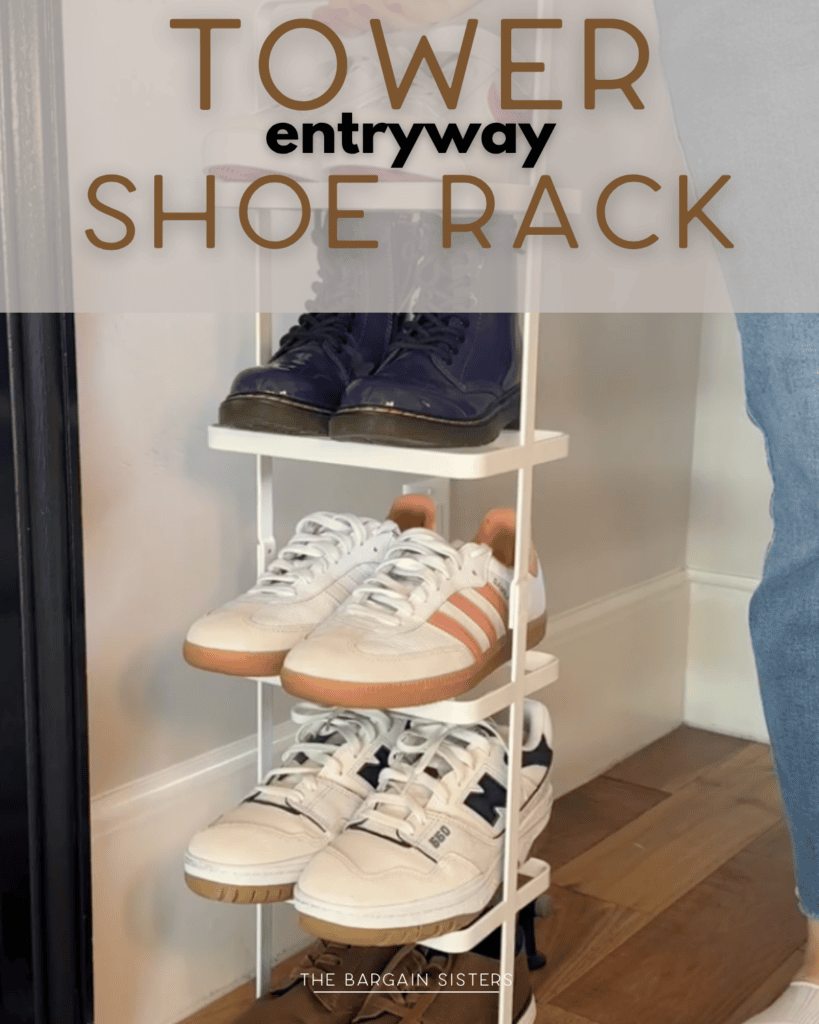
It is a vertical, tiered shoe stand that holds multiple pairs stacked on top of each other instead of lined up side by side. The narrow footprint tucks into a corner, closet, or tight entryway where a long, flat rack would never fit, and each tier holds one pair, so shoes stay together instead of scattered.
Why We Love it
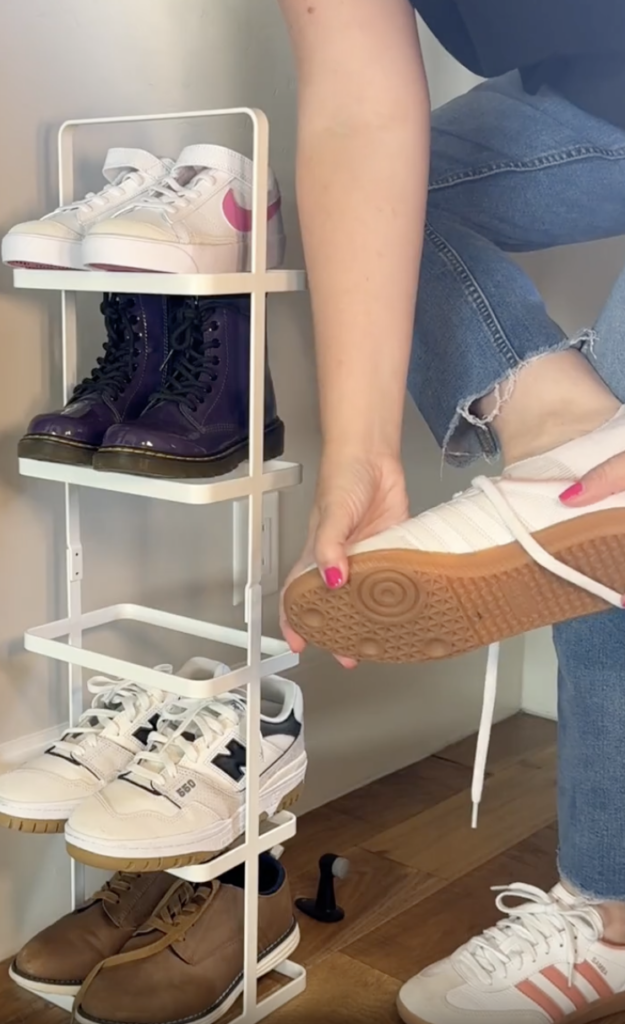
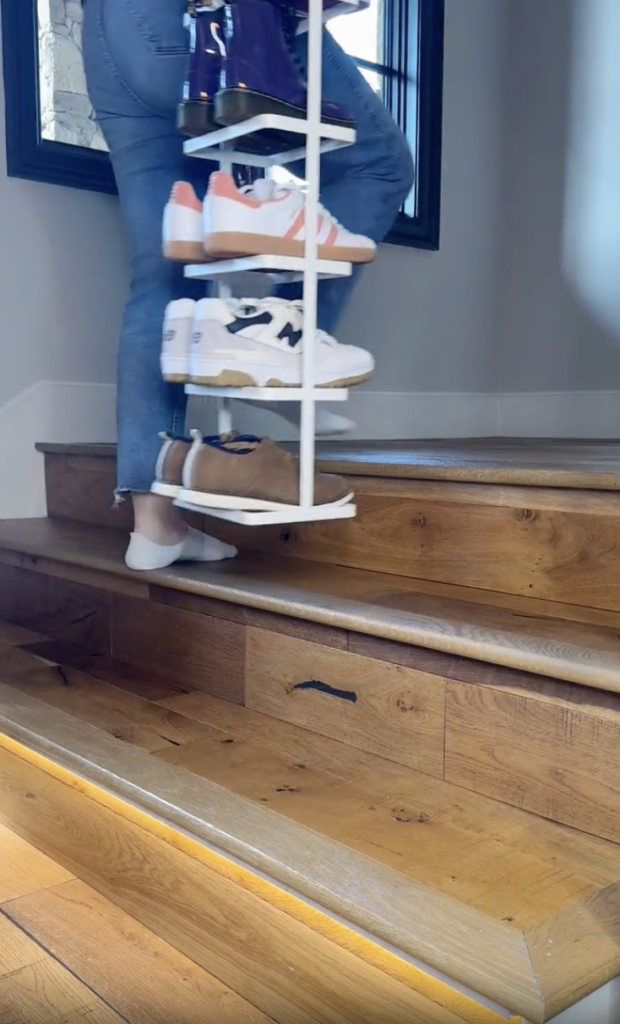
- Frees up floor space by going vertical instead of spreading shoes across the entryway.
- Fits in a narrow corner or closet where a flat rack would not.
- Keeps pairs together instead of one shoe here and one shoe three feet away.
- Wipes down easily, so muddy or wet shoes are not a mess to clean up.
- Light enough to move between the entryway and a closet as the seasons change.
- A National Association of Productivity and Organizing Professionals survey found most Americans say clutter raises their stress at home. An entryway that stays clear because shoes have a home is a small daily win against exactly that.
Pros and Cons
Pros
- Small footprint holds several pairs of shoes
- Fits in tight entryway corners or closets
- Keeps pairs together instead of scattered
- Easy to wipe clean
Cons
- Taller shoes or boots may not fit neatly on every tier
- It can feel a little top-heavy if it is loaded unevenly, so heavier shoes belong on the bottom tiers
- It does not hide shoes the way a cabinet would, so it is storage, not concealment
Bonus Tips… What you didn’t see in the reel 👀
- Load the heaviest shoes (boots, sneakers) on the bottom tiers to keep it stable.
- Slide a small tray under the bottom tier to catch mud or water before it hits the floor.
- Assign each family member a section so everyone actually uses it instead of dropping shoes on the floor next to it.
- Keep only current-season shoes on it. Rotating the rest into a closet is what keeps it from overflowing.
Where To Get it
This tower shoe rack is on Amazon. Check the current price there, and look at the tier height in the listing if boots are part of your lineup.
Frequently Asked Questions
Sneakers and shorter shoes fit best. Taller boots may need a lower or open tier depending on the model, so check the tier height before buying if boots are most of your collection.
Yes, as long as heavier shoes go on the bottom tiers so the weight stays balanced.
It depends on the tier count of the version you buy and on shoe size. Ours holds a full family’s everyday pairs with room to spare.
A flat rack spreads shoes across a wide space. The tower stacks them, so it holds more pairs in far less floor space, which is the whole point in a small entry.
Amazon, with Prime shipping.
If your entryway floor is permanently covered in shoes, this tower shoe rack is worth it, especially in a smaller space where a traditional flat rack just will not fit. Pin the image below for your next organizing day, or keep browsing our organization picks.
More Reviews You’ll Love
Want to save this to remember later? Make sure to pin the image below!

By Cassie & Ali – Bargain-hunting sisters and moms helping 500,000+ families save money since 2019.
Last Updated: